Day One: Field Visit
Tuesday, September 29th
Three Field Visit options trace the full arc of the current regional forest bioeconomy. Field Visits will run concurrently. Lunch is provided.
A: Does It Pencil? — Innovation & Markets in Industrial Timberland Management
Southern Humboldt
This field visit takes participants across three active sites that together tell a story about what it looks like to manage industrial timberlands for ecological health, economic viability, and market innovation — and what it takes to make that work at scale.
B: From Forest to Future — Building the Innovation Pipeline for a Forest Bioeconomy
Arcata & Samoa Peninsula
From Novel Innovation & Prototyping to Commercialization and Scaling, these assets, facilities and programs are at the heart of catalyzing the forest bioeconomy in our region.
C: A Basis for Growth: Investing in Workforce, Manufacturing, and Tribal Forest Product Innovation
HWY 299 Corridor
This field visit highlights the existing value chain within local manufacturing and production facilities, showcasing tribal forest product production, workforce investment initiatives, and the integration of Traditional Ecological Knowledge (TEK).
Day Two: Symposium
Wednesday, September 30th
Bear River Band of Rohnerville Rancheria's Tish-Non Community Center in Loleta, California
Opening Remarks
Patrick Wright
Director of the California Wildfire and Forest Resilience Task Force
Keynote
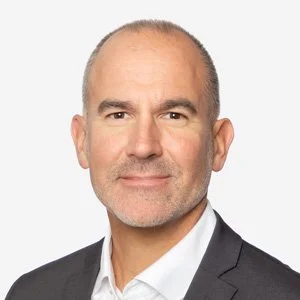
Prof. Dr. Raoul Klingner
Director Fraunhofer WKI Institute for Wood Research, Braunschweig, Germany
From Low-Value Wood to High-Tech Materials and Resilient Value Chains: 80 Years of Forest Bioeconomy Innovation and the Redwood Region Opportunity
Post-war Germany faced a version of the challenge the Redwood Region knows well: an abundance of forest material the existing economy had no good way to value, infrastructure and systems that left enormous potential on the table, and an urgent need to rebuild. The answer was innovation and 80 years later, Fraunhofer WKI stands as one of the world's leading wood product research institutions, having turned that untapped potential into a thriving global industry. Prof. Dr. Raoul Klingner, WKI's Director, Professor at Technical University Braunschweig, and newly appointed chair of Germany's national ministerial advisory group on forest and wood research, brings that story and its direct lessons here. His keynote will cover the materials WKI has developed, the policy investment that made it possible, the EU's newly released Bioeconomy Framework, and what WKI's current wildfire-resilient materials research means for California's construction markets and building codes.
Speakers
Michelle McCovey-Good, PE is a Professional Engineer, President and CEO of Ni'-Whōn Consulting, LLC, and CEO of T&S Structural. A member of the Hoopa Valley Tribe and of Hupa and Yurok descent, Michelle brings more than 27 years of engineering experience together with a lifelong connection to the cultural traditions and ecological knowledge of her people. Raised in Hoopa by her great-grandparents, she comes from a family of basket weavers, traditional regalia artisans, Hupa language teachers, and traditional home builders, whose teachings shaped her understanding of the reciprocal relationship between people and the natural world.
Today, Michelle works at the intersection of engineering, tribal community development, and cultural stewardship, advocating for infrastructure and land management practices that honor Indigenous values while strengthening community resilience. In her practice and as Chair of the Hoopa Valley Tribe Land Commission and Vice Chair of the Hoopa Valley Tribe’s Denoto Holding Corporation, she is passionate about elevating Traditional Ecological Knowledge (TEK) as an essential complement to modern science in new product development while recognizing tribes as indispensable partners in restoring healthy forests, reducing wildfire risk, and stewarding natural resources through generations of place-based knowledge. Drawing from both her engineering practice and her cultural heritage, Michelle champions collaborative approaches that respect tribal sovereignty and demonstrate the enduring value of Indigenous leadership in forest management and climate resilience.
Post-war Germany faced a version of the challenge the Redwood Region knows well: an abundance of forest material the existing economy had no good way to value, infrastructure and systems that left enormous potential on the table, and an urgent need to rebuild. The answer was innovation and 80 years later, Fraunhofer WKI stands as one of the world's leading wood product research institutions, having turned that untapped potential into a thriving global industry. Prof. Dr. Raoul Klingner, WKI's Director, Professor at Technical University Braunschweig, and newly appointed chair of Germany's national ministerial advisory group on forest and wood research, brings that story and its direct lessons here. His keynote will cover the materials WKI has developed, the policy investment that made it possible, the EU's newly released 2025 Bioeconomy Framework, and what WKI's current wildfire-resilient materials research means for California's construction markets and building codes. This session is also an opening move, a direct invitation to Cal Poly Humboldt, regional manufacturers, and economic development partners to explore what a formal transatlantic research relationship could look like. Come ready to listen, and to introduce yourself.
More speaker announcements coming soon.